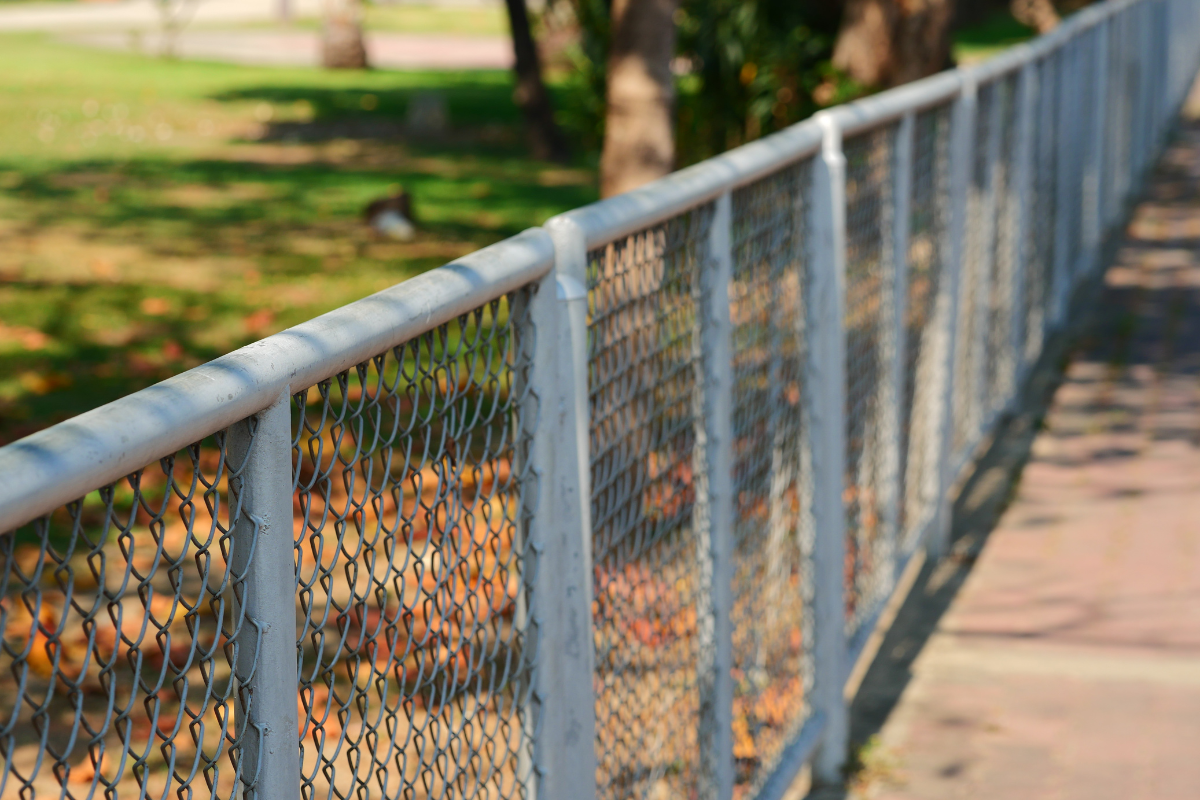
Commercial managers rarely have the luxury of a drawn-out perimeter project. When a construction site needs to mobilize, a warehouse expands into a new yard, or a utility substation upgrades security, the clock starts ticking. The question shifts from “what fence” to “how fast, without sacrificing quality.” Speed does not come from hurrying crews, it comes from disciplined planning, reliable materials, and the kind of field judgment that avoids do-overs. After years in the trade, I can tell you a fast-track chain link fence installation looks boring from the outside. Things arrive on time, holes line up, concrete cures, mesh stretches clean, and the gate swings true on the first try. The pace comes from everything you do before the auger hits dirt.
This guide focuses on commercial chain link fencing for speed and reliability. It covers preconstruction shortcuts that do not cut corners, field-tested installation tactics for shaving days off the schedule, and the maintenance and upgrade paths that keep a fence doing its job long after ribbon cutting. Along the way, I will use the language of the job: chain link fence installation, chain link fence repair, chain link fence contractor, and the realities of hiring a chain link fence company that can deliver under pressure.
Why chain link is the fast-track favorite
Chain link fencing is not the prettiest perimeter, but for commercial work, it wins on more than initial cost. The material is standardized and available from multiple suppliers, which matters when a schedule compresses. Crews know the system, from 2-3/8 inch line posts to tension bars and brace bands, so you are not dependent on a specialty installer who books out six weeks. Hardware and fittings are forgiving and modular, which means a change in the field can often be handled with a new brace or a longer tension rod instead of reordering custom parts.
Durability and security scale quickly. Add nine gauge fabric instead of eleven, specify a 6 gauge bottom tension wire or a rail, step up to 3 inch schedule 40 terminal posts, and the same base design becomes a high-abuse perimeter. Even add-ons like privacy slats, PVC coating, or barbed wire arms can be bundled into a fast-track plan because they install with standard tools and predictable steps. The system is fast because it is both simple and adaptable.
What “fast-track” really changes
Fast-tracking does not eliminate any critical step. It sequences steps to compress time and removes bottlenecks that slow commercial jobs. The biggest gains come from:
- Early decisions that lock the spec and allow procurement to run in parallel with permitting. Layout and site prep that prevent rework, especially on long runs where alignment errors compound. Hardware choices that install cleanly and tolerate imperfect terrain without custom fabrication. A gate plan that is decided before posts are set, not after.
We will unpack each one, starting with the place fast projects succeed or fail: preconstruction.
Preconstruction that saves weeks, not hours
Permits, layout, utilities, and procurement do not make good social posts, but they determine whether the crew finishes in three days or three weeks. In commercial chain link fencing, the precon phase pays the biggest dividends.
Start with your scope. Define linear footage, height, fabric type, and security options with enough detail to order. The spec I use for speed on a standard 8 foot perimeter includes 2 inch mesh, nine gauge galvanized fabric, 2-3/8 inch schedule 40 line posts at 10 foot centers, 3 inch schedule 40 terminal posts, top rail, bottom tension wire, and three-strand barbed wire on 45 degree out-facing arms. When budgets tighten or the environment is mild, I might drop to SS20 or SS40 tubing for line posts and keep schedule 40 for terminals. The point is not the exact numbers. The point is a spec that your chain link fence company can price in hours, not days, and your supplier can fill without special order delays.
Permitting often surprises new facility managers. Some jurisdictions treat chain link fencing as minor work; others want stamped drawings. If you need a permit, pull it early and align with local height limits, barbed wire rules, and sight triangle restrictions near driveways. On a recent automotive yard in a mixed-use zone, the city allowed 8 feet along the rear lot line but capped street-facing segments at 6 feet unless we added a 3 foot setback. We reworked only 60 feet of fencing and saved a two-week review cycle by resolving this during submittals.
Utility locates can be the villain on fast-track jobs. Call 811 and any private locate service as soon as you have a plan. Underground fiber and irrigation lines are the silent schedule killers. I once watched a job lose a week because a private sprinkler main was not marked and we hit it with the auger, flooding the trench and delaying concrete placement. Private locates cost a few hundred to a few thousand dollars depending on acreage. Compare that with pumping and soil drying time if you rupture a line in July.
Finally, order materials ahead. The chain link fence contractor who waits to see the jobsite before ordering loses the weather window. If the fence line is reasonably clear on drawings and the soils are typical, I will order posts, rails, fittings, and fabric as soon as the contract is fully executed, then hold back only concrete and a few specialty items until the precon walk. Standardize where possible: keep a stock of common brace bands, tension bars, rail ends, caps, and ties. The crew should never idle for lack of a 5/16 inch carriage bolt.
Design choices that maintain speed without inviting callbacks
There is a temptation to choose the thinnest material just to move fast. That often backfires when the first delivery truck bumps the fence and tweaks a light post out of plumb. The trick is specifying components that set quickly in the field and resist abuse, while staying common enough to supply on short notice.
For line posts, 2-3/8 inch OD with 0.120 wall, or schedule 40, is a sweet spot. It stands up to wind and human impact without turning your post setting into overkill. On runs longer than 300 feet in windy areas, someone will ask to add mid-bracing. Save the braces for terminals and corners. A better trick is to tighten your post centers to 8 foot 6 inches when wind exposure is extreme, or add a mid-height rail to reduce fabric sail.
For terminals, corners, and gate posts, do not skimp. Schedule 40 or better pays for itself when you hang a 20 foot cantilever gate. Gate posts bear both vertical and lateral loads; thin walls ovalize over time, and your gate starts dragging. If you already installed lighter posts and need a fix, bolt-on gate post reinforcers exist, but they are a bandage and not ideal for heavy use.
Fabric matters too. Nine gauge galvanized fabric resists stretching and deformation, especially near gates and high-traffic corners. PVC-coated fabric looks cleaner near public-facing facades and tolerates coastal exposure better, but ensure the core wire is at least nine gauge before coating, not after. If you need privacy but cannot tolerate the lead time for composite panels, specify winged slats that your crew can insert after the fence is tensioned. Plan the slats and wind load together, because a slatted 8 foot fence can carry double the wind pressure of bare mesh.
Security options should be designed for the site, not copied from the last job. Out-facing three-strand barbed wire at the top adds deterrence without slowing installation. Two-by-24 inch outriggers are more involved and might require field welding unless you pre-order bolt-on security brackets. Razor wire is fast on an industrial site but can trigger permit or community pushback on a retail parcel. Confirm the rules early, then stock the right arms and wire.
Site prep that prevents rework
An experienced chain link fence contractor starts by walking the line. Clearing brush and debris is not busywork; it exposes grade changes that affect post heights and bottom clearance. Decide whether the fence will step with grade or follow it. Stepping works best on clean grade changes and keeps the bottom line tidy. Following grade with fabric allows a tighter bottom in uneven areas but demands careful tensioning to avoid wrinkles and voids under the fence.
Check soil conditions. Clay and expansive soils demand wider or deeper footings, or both, and may call for bell-shaped holes to resist pullout. Sandy soils need depth, not just diameter, and sometimes a dry pack method with quick-setting concrete to keep the mix from sloughing into the hole. Frost depth governs post embedment in cold regions. I have had good performance with 30 to 36 inches embedment on 8 foot fences in moderate climates, and 42 inches where frost line approaches 36 inches. If your fence runs parallel to a retaining wall or atop a berm, re-evaluate the embedment based on apparent soil stability, not just an average number.
Mark gate swings and clearances before any holes are drilled. Gates are where fast-track projects slow down if you have to move a post or adjust grade late. Confirm the opening width, swing or slide direction, the concrete apron needed for trucks, and the automation footprint if you plan operators. Even on manual gates, I pour a wider footing at the latch side to resist racking and avoid loose latch posts. A single 24 inch diameter footing under the latch post can save an hour of tweaking every day for the next five years.
A paced, efficient installation workflow
Fast work is not frantic. It is predictable. On a typical job, my crew runs in three waves: set posts, install rails and braces, then stretch and tie fabric. If gates are automated, a fourth wave handles operators, loops, and access controls. The overlap between these tasks is where you gain days.
Start with string lines pulled tight between corner and end posts. Use batter boards or wood stakes to hold strings outside the fence line so you can drill without removing the reference. Drill holes to a consistent depth, verify alignment, and set terminals first. Brace assemblies go in while the concrete is still green enough to accept hardware adjustments, but not so fresh that terminals wobble. A quick rule: if your crew can push a terminal out of plumb with one hand, wait before bracing.
Concrete cure time can be the long pole in the tent. Dry-pack or rapid-set mixes help, but the real trick is sequencing. Set terminals and brace posts on day one and keep them plumb with temporary braces. Set line posts on day two, then install top rail and tension wire as the terminal footings gain strength. By day three, terminals are solid enough to handle fabric tension without drifting. In hot weather, shade footings if possible and keep mixes wet to prevent flash curing that shrinks and cracks.
Fabric goes faster with two simple habits. Pre-stretch your first length on the ground to identify any kinks or manufacturing bows. Then hang it from tension bars at both ends and pull with a come-along or a ratchet tensioner, using a stretcher bar that fully engages the diamonds. The number one cause of a wavy fence on day five is pulling fabric without a proper stretcher bar. Tie the fabric at the top rail first to hold line, then space ties at 12 to 18 inches on line posts and every 24 inches on the bottom tension wire. In high abuse zones, use 9 gauge aluminum ties or stainless in coastal areas. Simple galvanizing is fine inland if vandalism is low.
Corners are where time disappears. If you have a corner more than 45 degrees out of square, treat it as two end posts with their own braces, not a single corner post. It adds hardware, but it ends the fight to get fabric tension balanced around a tight angle. A clean corner takes half the time of a botched one you have to redo.
Gate installation without drama
Gates decide whether a chain link fence installation feels premium or slapdash. They must close cleanly, latch with one hand, and stay that way as seasons change. The fastest way to get there is to pre-assemble as much as possible. For swing gates, hang the leafs on sawhorses, install hinges and latches, and dry-fit hardware before lifting to the posts. Use full-wrap hinges for heavy use and adjustable gudgeons for fine alignment.
Set hinge spacing based on the gate’s center of gravity, not just symmetry. On a 12 foot swing gate, I’ll set the top hinge 8 inches from the top and the bottom hinge 10 to 12 inches from the bottom, then test for sag. A third mid-hinge is wise on 14 to 16 foot leaves. For cantilever sliders, get the counterbalance length right. A 20 foot opening usually calls for a gate frame near 30 feet long to carry the rear rollers. Under-sizing the back end creates roller pinch and a gate that binds every time the temperature changes.
If you plan automation, pour pads and set conduits before you finish the https://www.google.com/search?q=Southern+Prestige&ludocid=2241039838275878048&lsig=AB86z5WbXOUu0LTU_ulHchJoCYy7 fence run. I place 2 inch conduits for power and 1 inch for low-voltage control lines with sweeps that exit the slab inside a protected operator cabinet footprint. Cutting and coring pads later eats half a day and leaves a scar. Check UL 325 and ASTM F2200 requirements if you are specifying safety edges, photo eyes, and gate infill. A chain link fence contractor who legally and cleanly automates gates saves headaches with inspectors and insurers.
Quality control that keeps the schedule intact
Fast-track projects tolerate little rework. A small checklist on site keeps the crew from rolling forward with a hidden problem. Keep it short and practical.
- Verify line and terminal posts are plumb in two directions and to the string line before concrete sets. Confirm gate openings and swing paths are free of conflicts, including curbs and bollards. Check fabric tension by pressing midway between posts; minimal give without pulling diamonds out of shape is ideal. Inspect tie spacing and orientation; sharp tails should point away from traffic to reduce snagging and injury. Spot-check post embedment depth at random intervals, measure from finished grade to hole bottom during drilling.
Two minutes per bay to confirm these items avoids the classic end-of-day discovery that five posts drifted out of line or a gate leaf is racking under its own weight.
Safety practices that speed, not slow, the job
Safety and speed support each other when the plan is simple and consistent. Keep auger operators and post setters in clear communication. If you drill near utilities, use a spotter and a vacuum excavator for the first 12 to 24 inches to confirm the hole path. Store fabric rolls where they cannot unspool downhill or into a driveway; I have seen more ankles twisted rescuing runaway mesh than I care to remember. Cutting and grinding go faster with two chargers per tool and a keyed spot for spare blades. Small logistics details add hours of productive time without pushing people into risky shortcuts.
Repair and retrofit strategy for active sites
Commercial perimeters breathe. Forklifts bump them, tenants request new gates, and a drainage project interrupts a run. A fast-track mindset continues into chain link fence repair. Keep a bin with common fittings, four or five pre-cut tension bars, assorted brace bands, rail ends, a spool of 9 gauge tie wire, and a 50 pound bag of rapid-set mix on the truck. With those and a couple of posts, you can repair most damage in a single visit. If fabric tears near the middle of a run, cut out a full diamond at each side so the patch bar seats cleanly, then re-tension with a come-along and add ties. Sloppy patches cost more in callbacks than a clean section replacement.
Upgrades should respect the original hardware. If you add privacy slats after the fact, confirm terminal post strength and brace quantity. A fence that was fine unslatted may bow under wind load with slats installed. If the fence has become a high-target perimeter, adding bottom rail or a second tension wire deters lift attempts. When vegetation grows into the fence, resist the urge to break out a chainsaw and hack away at embedded vines. Cut in sections from the bottom, roll material back, and avoid pulling the fence off line. I learned that one the hard way on a utility site where we created a bigger problem than we solved.
Budget reality without schedule pain
Fast does not always mean expensive. The most reliable savings come from coordination and standardization, not shaving material weight to the bone. Order a single fabric type across the project and buy an extra roll, then use the remnant for gates or small repairs. Standardize on one post size for line posts and one for terminals wherever possible. Keep gate openings to common sizes that match stock panels, such as 12, 16, and 24 feet. Avoid custom widths unless the site demands it.
Where clients want savings that do not hurt the schedule, I propose dropping bottom rail on long straight runs in favor of a tension wire, then add bottom rail only at gates and corners where abuse is highest. I also look at post spacing. Moving from 10 foot to 8 foot centers increases post count but can allow lighter line posts for the same performance and sometimes reduces wind-related callouts. The material balance matters, and a seasoned chain link fence contractor will show you both options with clear numbers.
Choosing a chain link fence company for a compressed timeline
When the schedule is tight, references matter more than low bid. Ask specifically about fast-track projects of similar scale. You want to hear that they mobilized in days, not weeks, and that their chain link fencing services included permitting support and material procurement well ahead of field work. Visit a recent site if you can. Look for consistent post heights, true lines, and gates that open with one hand.
Verify insurance, safety record, and crew size. A company that subs all field work may still deliver on time, but coordination risks rise. The best balance I see is a chain link fence company with at least one in-house crew and a trusted bench of subcontract crews they have used for years. Ask how they handle change orders. On a fast project, you want rapid pricing with field-authorized caps, not a paperwork delay that stalls the crew.
If the site includes automated gates, pick a contractor who handles operators and access control in-house or partners tightly with a gate automation specialist. Splitting that scope often creates finger pointing when sensors misread or gates drift. An integrated team will coordinate concrete pads, conduits, wiring, and programming in sequence.
Two case notes from the field
At a logistics park expansion, the owner needed 1,400 linear feet of 8 foot chain link with three-strand barbed wire, two 30 foot cantilever gates with openers, and privacy slats along the office frontage. The request came with a four-week deadline to secure inventory before peak season. We pulled a permit in five days by submitting a clean, standard spec and a site plan that respected sight triangles at truck exits. Materials arrived by the end of week one because we ordered immediately. Terminals and braces were set by day four. Line posts and rails went in during week two, while our automation partner formed and poured gate pads. Fabric stretched in three days. Slats and operator install overlapped. We delivered two days early, with one rain day absorbed by the pad pour. Nothing magical, just a tight plan and parallel tasks.
Contrast that with a retail redevelopment where an owner insisted on a custom powder-coated color for fabric and posts. The color matched the brand beautifully, but the lead time was seven weeks on posts alone, and the site needed a safe perimeter in three. We built a temporary galvanized chain link fence installation using rental panels and anchored posts at the vulnerable sides, then swapped to the permanent system once the coated materials arrived. The client paid a premium for the temporary, but the store opened on time and the branding goals were met. Fast-track sometimes means two phases and a candid conversation about trade-offs.
Maintenance rhythm that keeps it fast next time
A fence that stays tight is faster to modify and cheaper to maintain. Schedule a once-a-year walk, preferably before storm season. Bring a socket set, a post level, extra ties, and a can of cold galvanizing spray. Tighten brace bands, replace missing ties, touch up cuts, and note any gate leaf sag. If a truck bent a line post and the fence line waves for 30 feet, replace the post rather than trying to muscle the fabric back into plane. Short, clean fixes prevent the slow drip of small problems that turn into a full-blown chain link fence repair project.
If you expect forklifts or trailers to hit corners, add bollards before it happens. Two 6 inch pipe bollards filled with concrete at each corner pay for themselves the first time a driver misjudges the turn. A day of bollard install is cheaper than a day of fence rebuild.
When to step up the system
Chain link can be a base for upgrades when security risks increase. Adding micro-mesh fabric near high-value assets deters hand tools. Installing a bottom rail with through-bolted clips resists lift attempts better than wire alone. Anti-climb curved arms at the top slow down over-fence access. None of these features slow the original timeline if you plan them early, and many can be retrofitted without starting over.
For sensitive facilities, consider integrating fence detection systems that clip to the mesh and detect vibration patterns. Choose models tolerant of wind noise and wildlife, and coordinate cable routing and controller placement during installation. A good chain link fence contractor will pull low-voltage lines and mount junction boxes as part of the base scope, even if the electronics come later.
A straight path to a fast, solid outcome
Fast-track commercial chain link fencing rewards discipline. Lock the spec early, coordinate utilities and permits, order common materials immediately, and commit to a paced workflow that prevents rework. Choose a chain link fence company with real fast-track experience and the inventory and staffing to match the promise. Decide gate details before the first hole is drilled. Keep the quality checks short and constant, so you never discover a big problem at the end of a long day.
Done right, chain link fence installation for a commercial site is one of the rare construction scopes that can compress without drama. Crews move steadily, the line comes out straight, the gates swing true, and the owner gets the secure perimeter they needed when they needed it. That is what fast-track should feel like: predictable, clean, and built to last.
Southern Prestige
Address: 120 Mardi Gras Rd, Carencro, LA 70520
Phone: (337) 322-4261
Website: https://www.southernprestigefence.com/